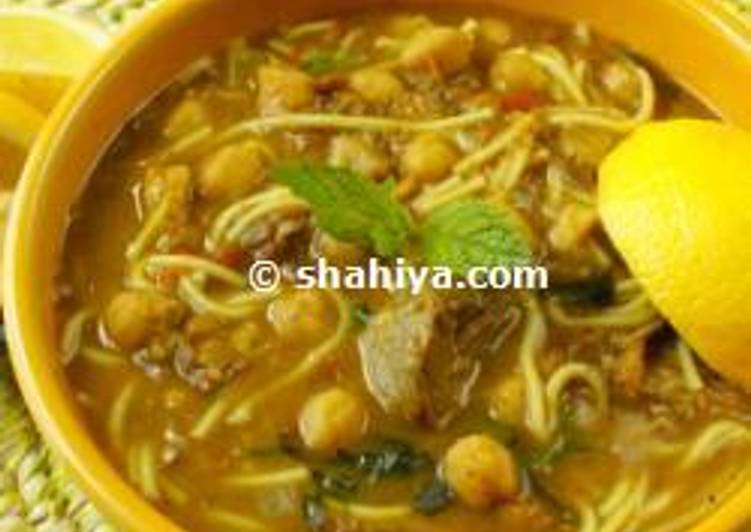
Hey everyone, it’s me again, Dan, welcome to my recipe page. Today, I will show you a way to prepare a distinctive dish, traditional harira soup. It is one of my favorites. For mine, I will make it a little bit tasty. This is gonna smell and look delicious.
Harira is a classic Moroccan comfort soup made with tomatoes, lentils, chickpeas, fresh herbs, dried spices, and meat, making it a filling and satisfying dish. Although served year-round, it is particularly popular for breaking the fast during Ramadan. Harira is a traditional Moroccan soup of tomato, lentils and chickpeas. Wonderfully fragrant with zesty seasoning, it often ranks high on lists of must-try Moroccan foods.
Traditional Harira Soup is one of the most popular of current trending foods on earth. It’s enjoyed by millions every day. It is simple, it’s fast, it tastes delicious. Traditional Harira Soup is something which I have loved my entire life. They are fine and they look fantastic.
To get started with this particular recipe, we must prepare a few ingredients. You can have traditional harira soup using 18 ingredients and 8 steps. Here is how you can achieve it.
The ingredients needed to make Traditional Harira Soup:
- Prepare 300 g lamb, cubed
- Take 150 g green lentils
- Make ready 150 g chickpeas
- Take 1 onion, chopped finely
- Get 150 g celery, chopped finely
- Get 2 tablespoons tomato paste, diluted with a little bit of water
- Get 400 g tomato juice
- Take 100 g flour
- Get 1 vermicelli, handful
- Prepare 1 bunch of coriander, chopped finely
- Take 1 bunch parsley, chopped finely
- Take 3 lemons, cut into wedges
- Get 3 tablespoons oil
- Prepare 1 tablespoons turmeric
- Take 1 saffron threads
- Get 1⁄2 teaspoon cumin
- Take black pepper to taste
- Make ready salt to taste
It's a chickpea and lentil soup that's made with either beef or lamb. Harira soup is a traditional Moroccan soup that is made all year long but traditionally is used to break the fast during Ramadan, every night. Harira has vegetables such as onion, celery and tomatoes and herbs such as cilantro and parsley. It has some mild spices and it is high in protein thanks to the meat, lentils, egg and chickpeas.
Steps to make Traditional Harira Soup:
- Heat the oil in a deep saucepan and add in the meat, turmeric, saffron, coriander, parsley, onion and celery. Season with salt and stir.
- Add in a cup of water and stir over low heat for 5 to 10 minutes.
- Pour 2 liters of boiled water over the meat mixture and add in the lentils and chickpeas. Simmer covered over low heat for about 50 minutes.
- Then add in the tomato juice, tomato paste and cumin and cook for another 20 minutes.
- Meanwhile, in a bowl mix the flour with half a liter of cold water. Whisk well to prevent the formation of lumps and strain.
- Pour the flour and water mixture over the soup and mix slowly to prevent lumps.
- Finally, add in the vermicelli and stir constantly for about 5 to 10 minutes. By then you should have a thick soup.
- To serve, squeeze the lemon over the harira soup.
Harira has vegetables such as onion, celery and tomatoes and herbs such as cilantro and parsley. It has some mild spices and it is high in protein thanks to the meat, lentils, egg and chickpeas. Harira is the famous soup of Morocco that is traditionally served during Ramadan at sunset to break the daylight fast. While every family has its own recipe with slight variations the traditional Harira is a tomato based soup with lamb, chickpeas, lentils, and pasta, infused with the flavors of lemon, cinnamon, cilantro, parsley, saffron, and. Then this Moroccan chickpea and lentil soup (Harira) is just for you.
So that is going to wrap it up with this special food traditional harira soup recipe. Thank you very much for reading. I’m confident that you can make this at home. There is gonna be more interesting food in home recipes coming up. Don’t forget to bookmark this page on your browser, and share it to your loved ones, friends and colleague. Thanks again for reading. Go on get cooking!